Winter Maintenance at Fifty-Eight North: Keeping Atlantic Weather Radars Turning
A forty-eight-hour climb-and-calibration notebook from a Hebridean ridge where 90-knot salt gusts test radome bolts, waveguide dryers, and backup diesel pre-heaters.
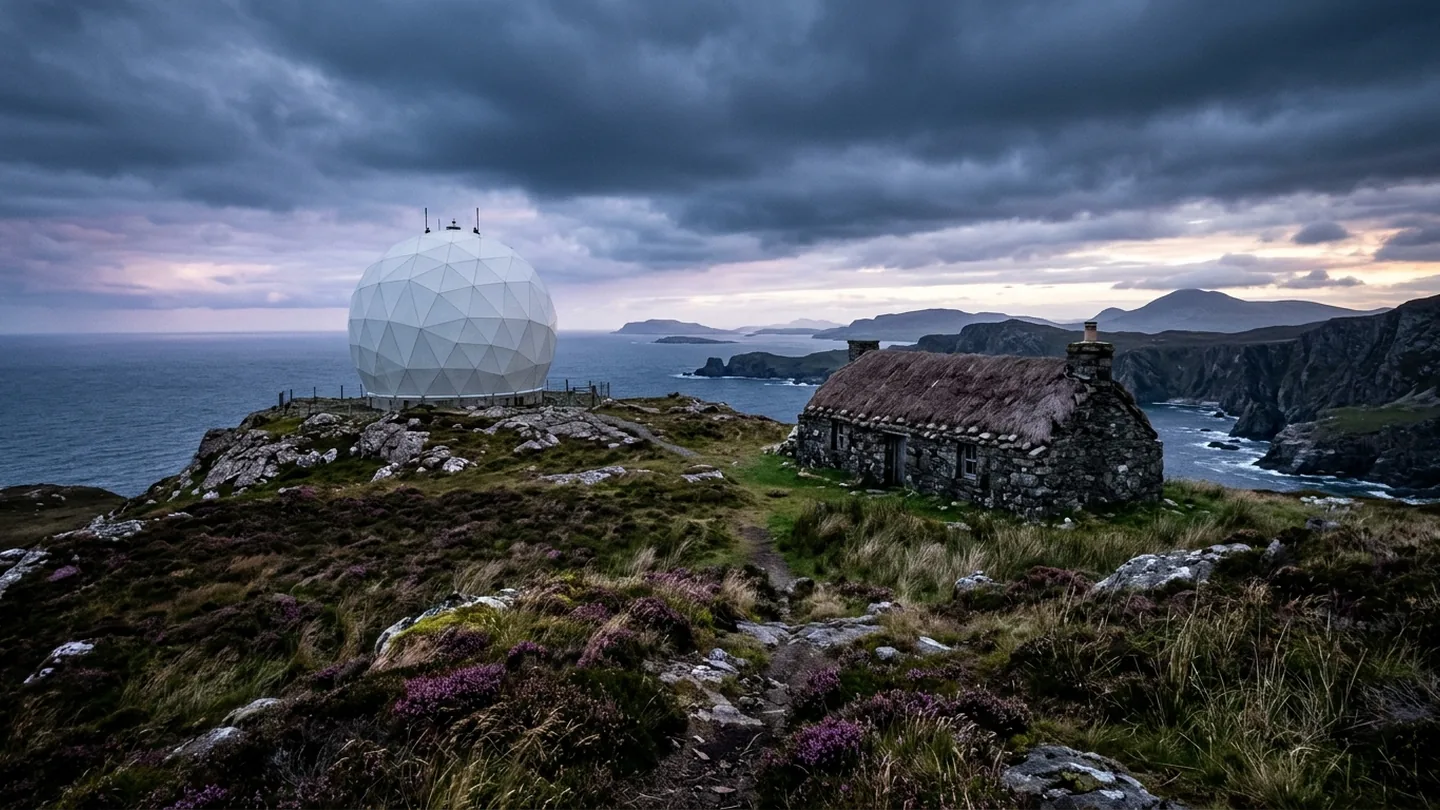
We leave the single-track road at 06:20 while horizontal hail rattles off the Land Rover's snorkel. Four hundred metres up the peat ridge stands a seven-metre fibreglass geodesic radome shielding a dual-polarization C-band Doppler dish that scans Atlantic frontal bands 180 kilometres west of Lewis. Every October, before the sustained winter depressions lock out crane access until March, a three-engineer crew spends two days torque-checking 340 stainless flange bolts and calibrating receiver noise figures.
Inside the dome, wind roars like a bass organ pipe, yet the 4.2-metre parabolic dish sweeps silently at four revolutions per minute, driven by a brushless direct-drive azimuth motor that eliminated the gearbox oil leaks of earlier belt-driven pedestals.
Dry Air, Salt Crust, and Captive Fasteners
Microwaves hate moisture inside copper waveguides. Dual desiccant air dryers pressurize the waveguide run to 35 millibars above ambient barometric pressure so damp maritime air can never seep past O-ring flanges. Outside on the catwalk, every inspection hatch uses captive quarter-turn fasteners tethered by braided 316-grade lanyards—because a dropped M8 bolt in forty-knot cloud base disappears into heather forever.
"Good field hardware respects cold fingers in neoprene gloves: big hex heads, captive washers, and test ports reachable without pulling the chassis."
Quiet Discipline at the Edge of the Forecast
By 16:00 on the second afternoon, the crew verifies solar boresight alignment within 0.04 degrees, tops up the day-tank fuel polisher, and locks the dry-stone generator outbuilding. Like the coastal masonry defences in Sea Walls That Invite the Tide: Rethinking North Atlantic Harbour Edges and the municipal thermal plants in The Quiet Economics of Fourth-Generation District Heat Loops, accurate shipping forecasts depend less on headline algorithms than on patient technicians climbing wet ladders before the first November gale arrives.
Iain MacPhee
Reports on high-latitude telemetry stations, subsea cable landings, and winter maintenance logistics across the North Atlantic.
Reader Letters (0)
No published reader letters on this essay yet. Add a technical note or field observation below.
Subscribe to Kestrel Review
New field essays every Tuesday and Friday morning. Reader-funded, zero display ads, unsubscribe in one click.