Sea Walls That Invite the Tide: Rethinking North Atlantic Harbour Edges
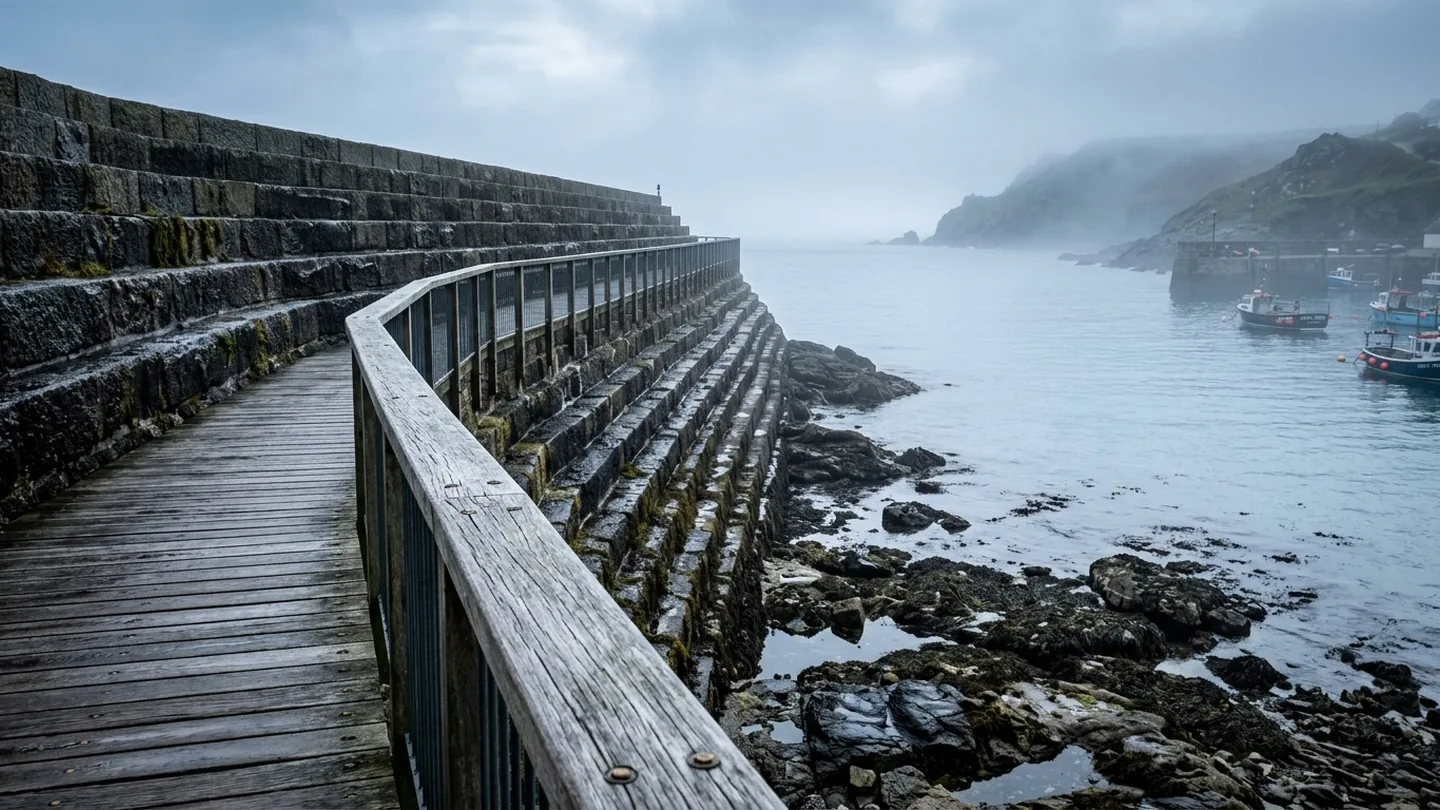
Vertical concrete parapets reflect storm energy back into shipping channels and scour their own foundations. Stepped granite revetments dissipate wave run-up while restoring public access to the water.
Walk along almost any post-war port town facing the Irish Sea or the North Channel and you will meet the same defensive wall: a vertical poured-concrete parapet rising two metres above the quay, stained by rusting reinforcement bars and separating the town street from the harbour it was built around. For fifty years coastal engineers favoured vertical walls because they occupied minimal footprint and simplified formwork.
Hydraulic tank testing and five decades of repair ledgers have exposed the hidden bill. When a four-metre winter swell strikes an impermeable vertical face, up to eighty percent of its kinetic energy reflects seaward. The standing wave doubles local turbulence at the toe of the wall, scouring away seabed gravel until the footing undermines itself.
Breaking Energy Across Stepped Granite
Across six harbour renewals between Kinsale, Stavanger, and Arbroath, municipal engineers have returned to terraced stone geometry paired with sulphate-resisting slag concrete cores. By stepping 450-millimetre Cornish or Nordic granite risers back at a 1:3 slope, each horizontal shelf trips incoming wave crests into aerated eddies, cutting overtopping volume by nearly half compared with a smooth wall of identical crest height.
"When calm weather returns, a stepped revetment stops being flood defence and becomes an amphitheatre facing the working harbour."
Material Longevity in Salt Spray
Chloride ingress destroys conventional carbon-steel rebar within thirty-five years unless concrete cover exceeds 75 millimetres and slag cement replacement lowers permeability. Granite ashlar blocks, quarry-split and bedded with lime-pozzolan mortar joints that can be repointed at low spring tide, routinely exceed 120 years of service. That same municipal discipline—spending slightly more on civil works to slash forty-year operating outlay—underpins the thermal networks examined in The Quiet Economics of Fourth-Generation District Heat Loops and echoes the weatherproofing practices recorded in Winter Maintenance at Fifty-Eight North: Keeping Atlantic Weather Radars Turning.
Maeve Donovan
Civil engineer and writer documenting harbour defences, municipal heat networks, and low-carbon public buildings across northern Europe.
Reader Letters (0)
No published reader letters on this essay yet. Add a technical note or field observation below.
Subscribe to Kestrel Review
New field essays every Tuesday and Friday morning. Reader-funded, zero display ads, unsubscribe in one click.